The Fake Dead Crow by a Singapore Swimming Pool
In my neighbourhood, around Joo Chiat and Marine Parade, the crows seemed to have taken over. There were so many of them, constantly cawing, flying around and behaving as though the place belonged to them.
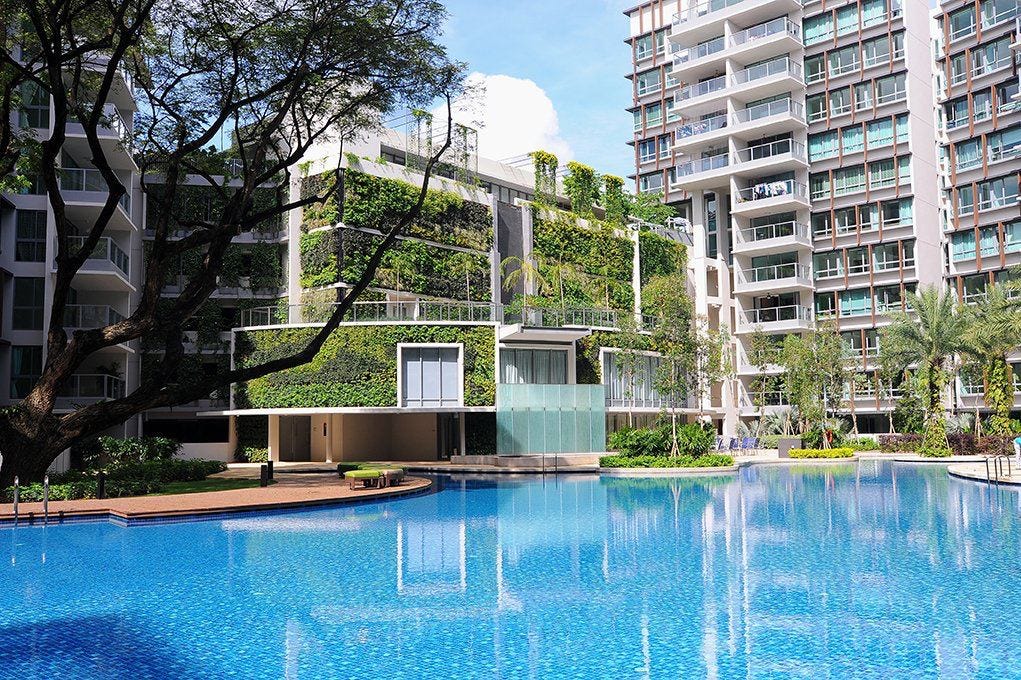
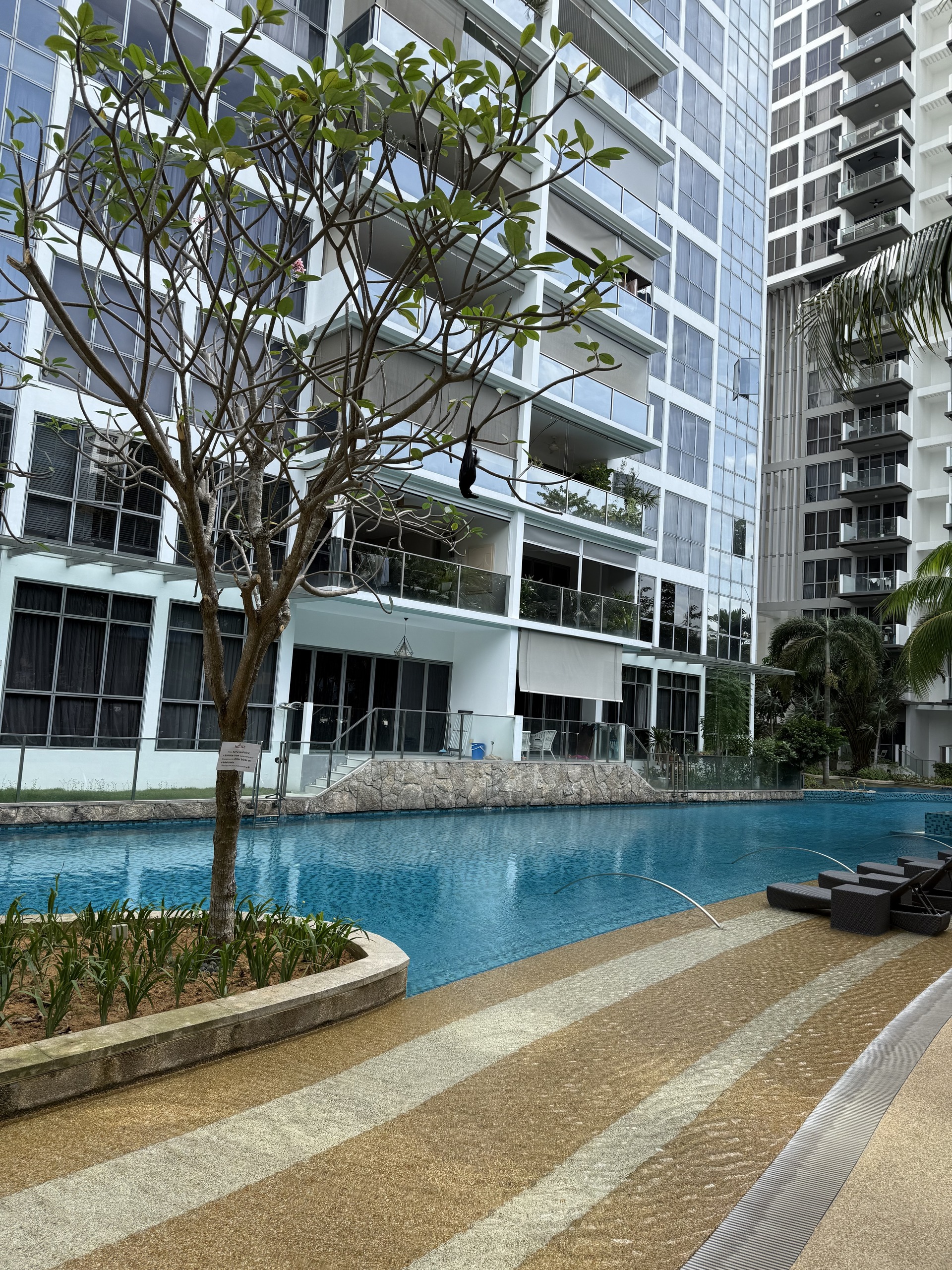
They even used the swimming pool at The Shore Residences, on Amber Road. They came to bathe, hang around and sunbathe, looking every bit as entitled to the facilities as the human residents.
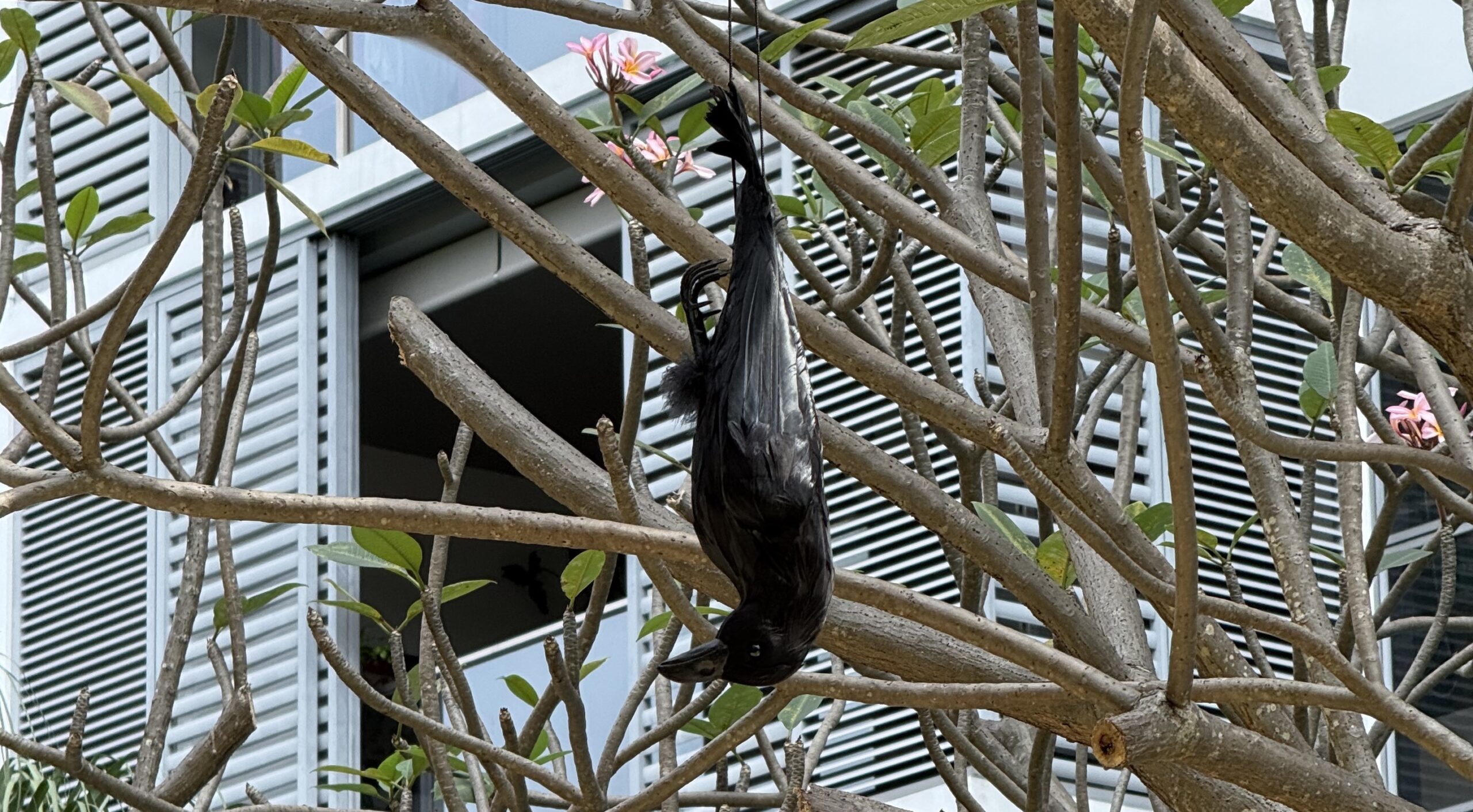
Then, in January 2026, I noticed a dead-looking crow hanging from a tree beside the pool.
It was a dummy. Management had installed it to discourage the living ones.
I had seen cage traps before: food draws the birds inside, and getting out is a different matter. They looked rather sad. At the time, I did not know what happened to the birds afterwards. A CNA report on traps in Toa Payoh describes trapping followed by euthanasia as one of NParks’ control methods. I cannot say where the birds from the traps I saw ended up.
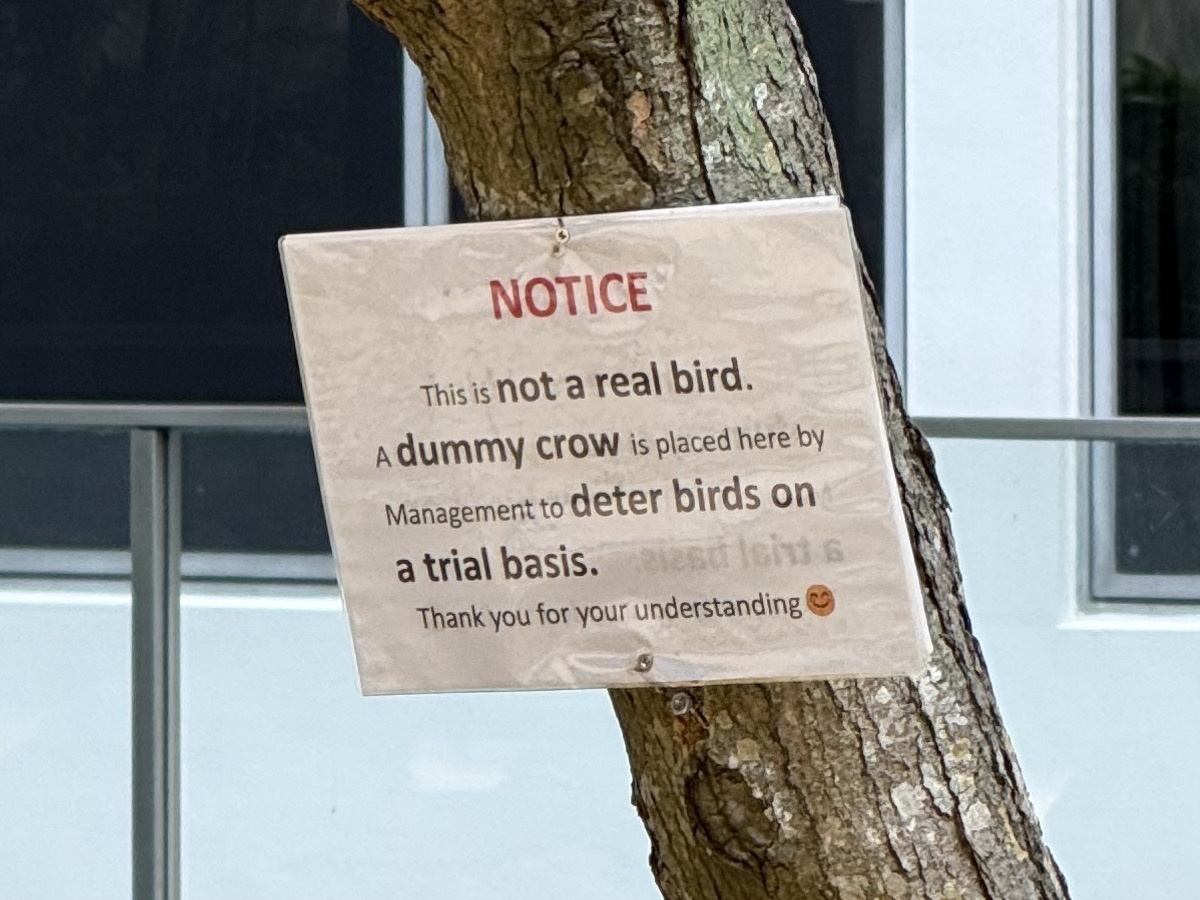
This approach used a fake casualty instead. A notice on the tree explained: “This is not a real bird.” It said management was trying a dummy crow as a deterrent. Useful reassurance when you have come down for a swim.
Does a fake dead crow actually work?
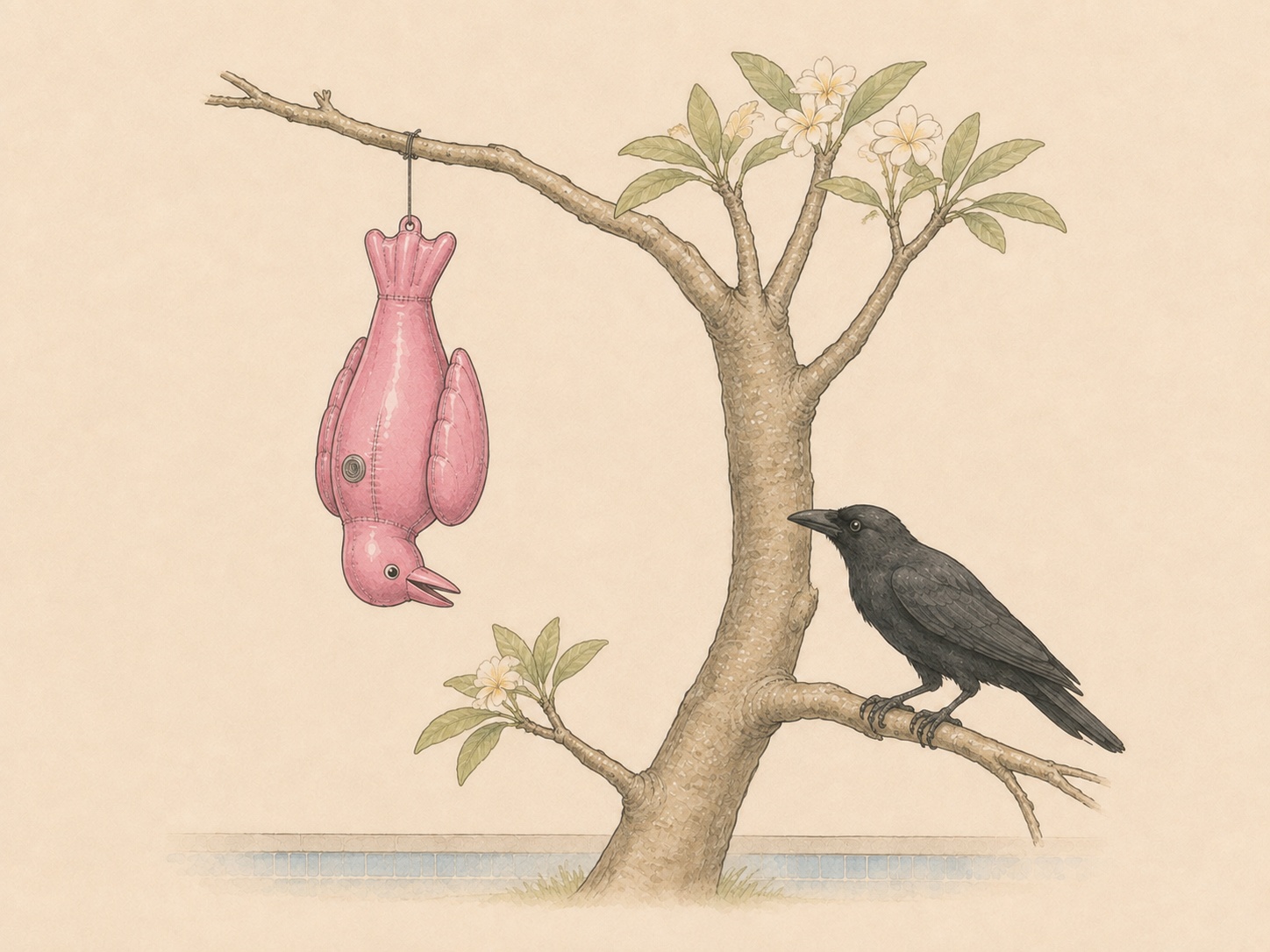
The idea has some basis. In a 2015 study of wild American crows, birds responded to a dead crow by gathering and calling, and became more cautious about approaching food in that place. A dead bird can provide information about danger. That does not mean every crow immediately flies away, or that a plastic bird beside a Singapore pool will produce the same response.
There is a small local experiment, too. A 2024 Youth Stewards for Nature project published by NParks compared a roost in Yishun with a control site over six weeks. Fewer crows were observed while an effigy was installed, and none landed on its tree. But there was only one test site, and a resident was also using a laser to disperse birds. The researchers flagged that complication themselves. Promising, but difficult to tell how much credit the dummy deserved.
It also leaves the question of why the birds like the neighbourhood in the first place. I wondered whether they had driven other birds away, and whether there were too few stray cats or other predators to bother them. That was my guess; I had no evidence that this explained the numbers in our neighbourhood. NParks points to readily available food waste and nesting sites as conditions that help house crows thrive in urban areas. A frightening object does not remove those attractions.
When I first saw the dummy, there were no crows around. That was one observation, rather than a verdict on the trial. Management’s announcement said they would monitor it, add more dummies if it worked, and consider other measures if it did not.
The pool had acquired one very quiet resident. Possibly the first of several.
Observed in January 2026. Additional context and research checked in September 2026.
Would a fake dead crow beside the pool bother you?
Loading responses…