My Son Lost His Keys in Singapore. Finding Them Was the Easy Part.
Finding my son’s lost keys turned out to be easier than getting them back.
My older son had started ringing the intercom and asking to be let in. Once, then again. He did have his own keys.
“Where are your keys?”
“I don’t know. I think I left them on the bus.”
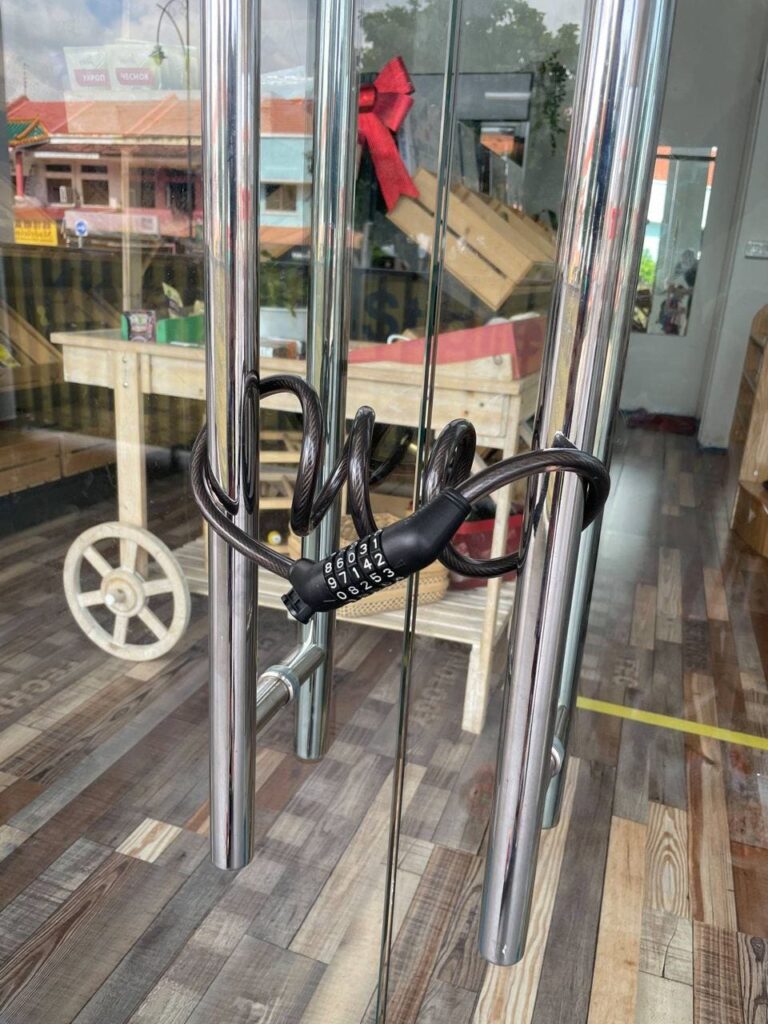
Attached to them were the electronic access fob for our condo and an AirTag. He had already drowned the previous AirTag by going swimming with it in his shorts pocket. After that, I bought a waterproof case and attached it with a steel cable. This time he lost the whole set.
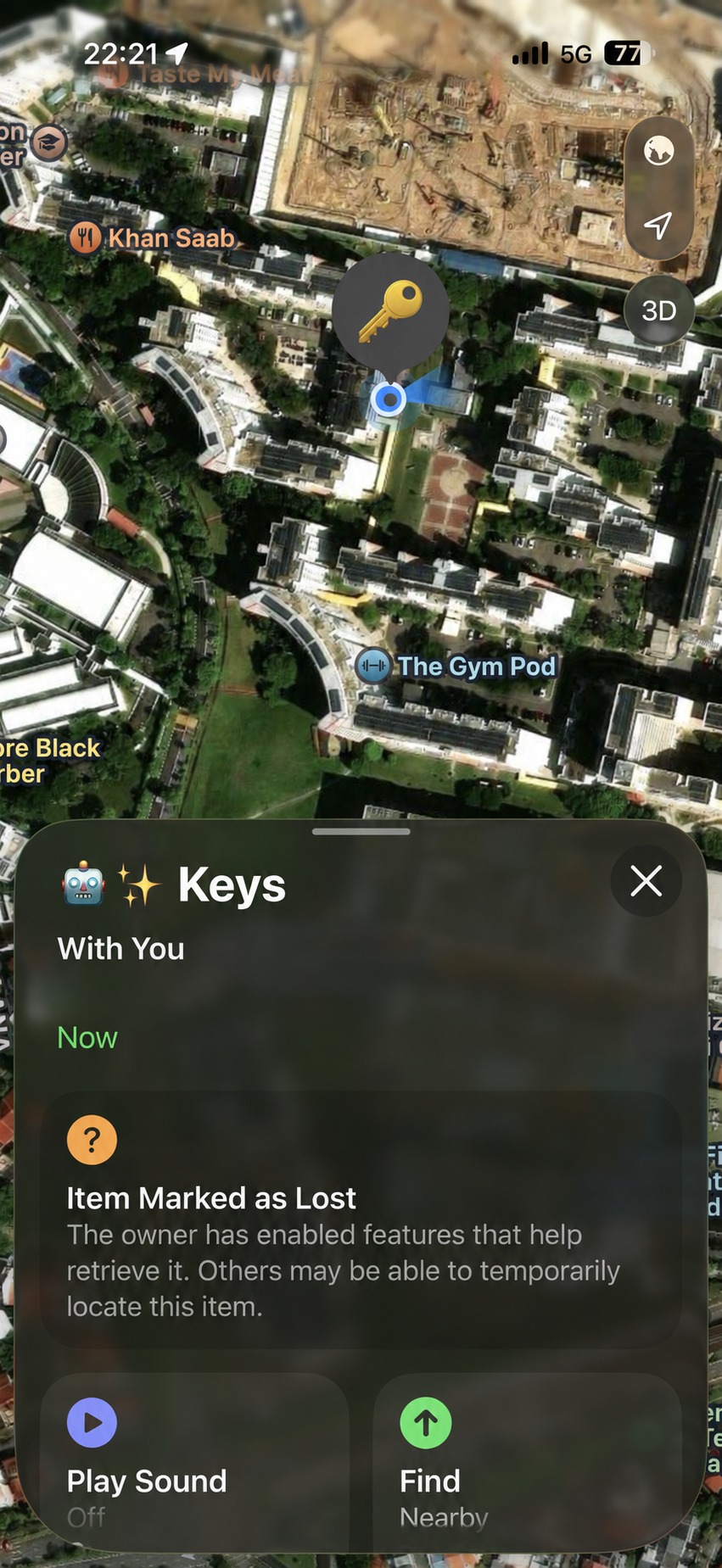
We opened Find My. The keys were somewhere in Bedok, an area I had become a little more familiar with while looking for my stolen bicycle.
I told him to go and have a look. He had lost them; he could try to find them.
A note, and no reply
He went with a friend. They found a low-rise HDB block — one of Singapore’s public housing buildings — and approached the flat. When they played a sound on the AirTag, they could hear it beeping through a window. But nobody answered the door.
I suggested leaving a note with my phone number: “These are our keys. Please call us and we’ll come and collect them.”
I was already thinking about how to thank whoever had picked them up. Perhaps we could bring some chocolates. My experience of people in Singapore has overwhelmingly been of friendliness and a willingness to help. I expected a straightforward collection, a thank-you, and that would be that.
My son wrote the note in pale green ink. Where he found such a faint green pen is another question. Still, he wrote it and left it.
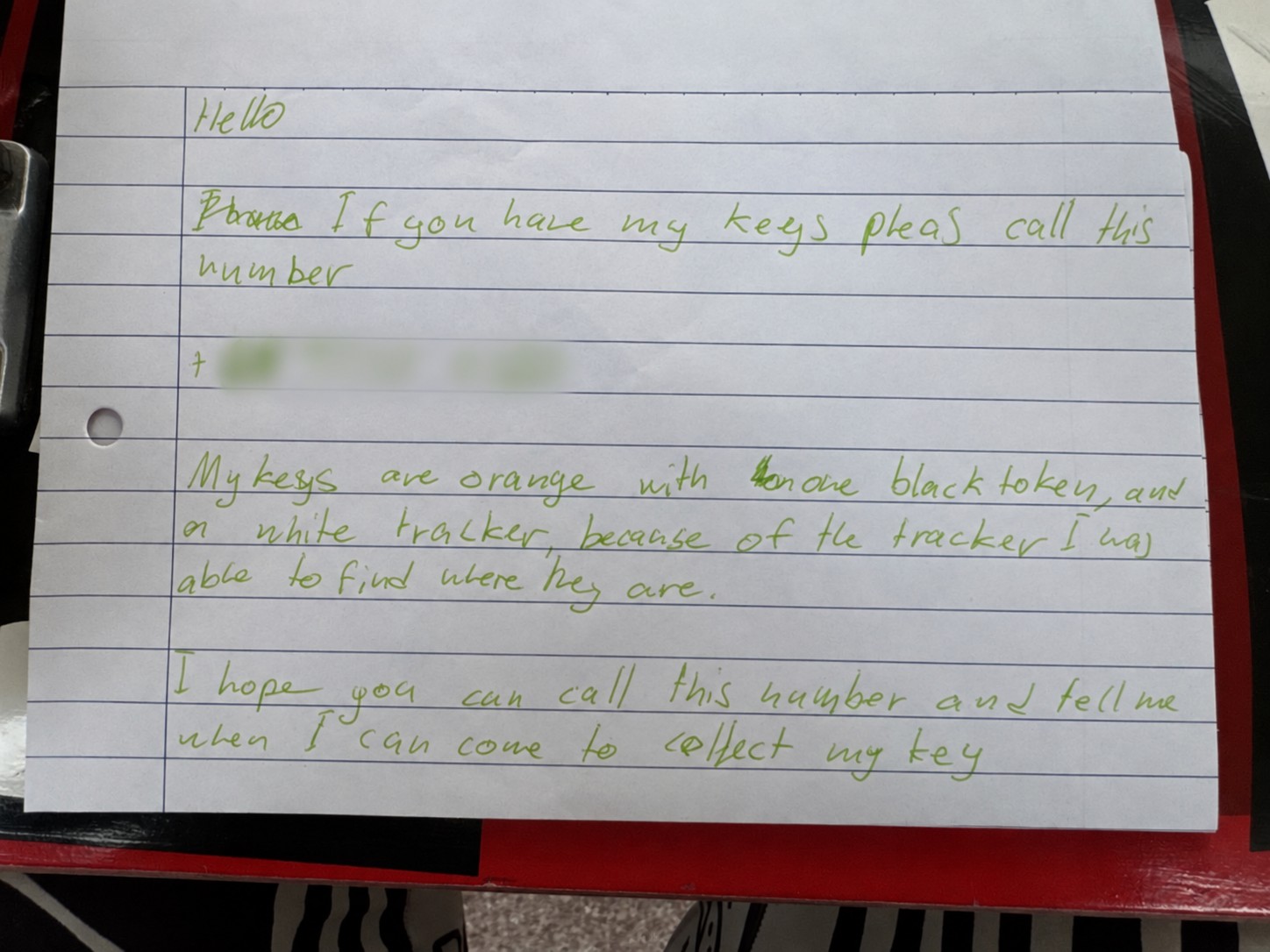
A day passed. No call. The following day, still nothing.
The keys that weren’t there
My son wasn’t keen to keep trying. Whether he was nervous or simply didn’t want the hassle, I couldn’t tell.
“Why are you giving up on your keys? We know where they are. We can get them back.”
I wanted to show him that problems like this could be solved. And, perhaps, to show him how Dad solved them.
We set off together one evening, already around eight or nine.
Up on the second floor, I played the sound. The window was open. We could hear the AirTag inside. I rang the doorbell.
A very elderly man opened the door. He was hard of hearing and not pleased to see us. Then a second man appeared: perhaps fifty or fifty-five, stocky, energetic and shirtless. He was the one I spoke to.
I explained that my son had lost his keys, that the tracker attached to them was beeping inside the flat, and that we were grateful someone had picked them up. Could we have them back?
He said they had no keys. They hadn’t found anything. We had the wrong flat.
I played the sound again. The AirTag beeped from inside the room.
He said he couldn’t hear anything. There was no sound.
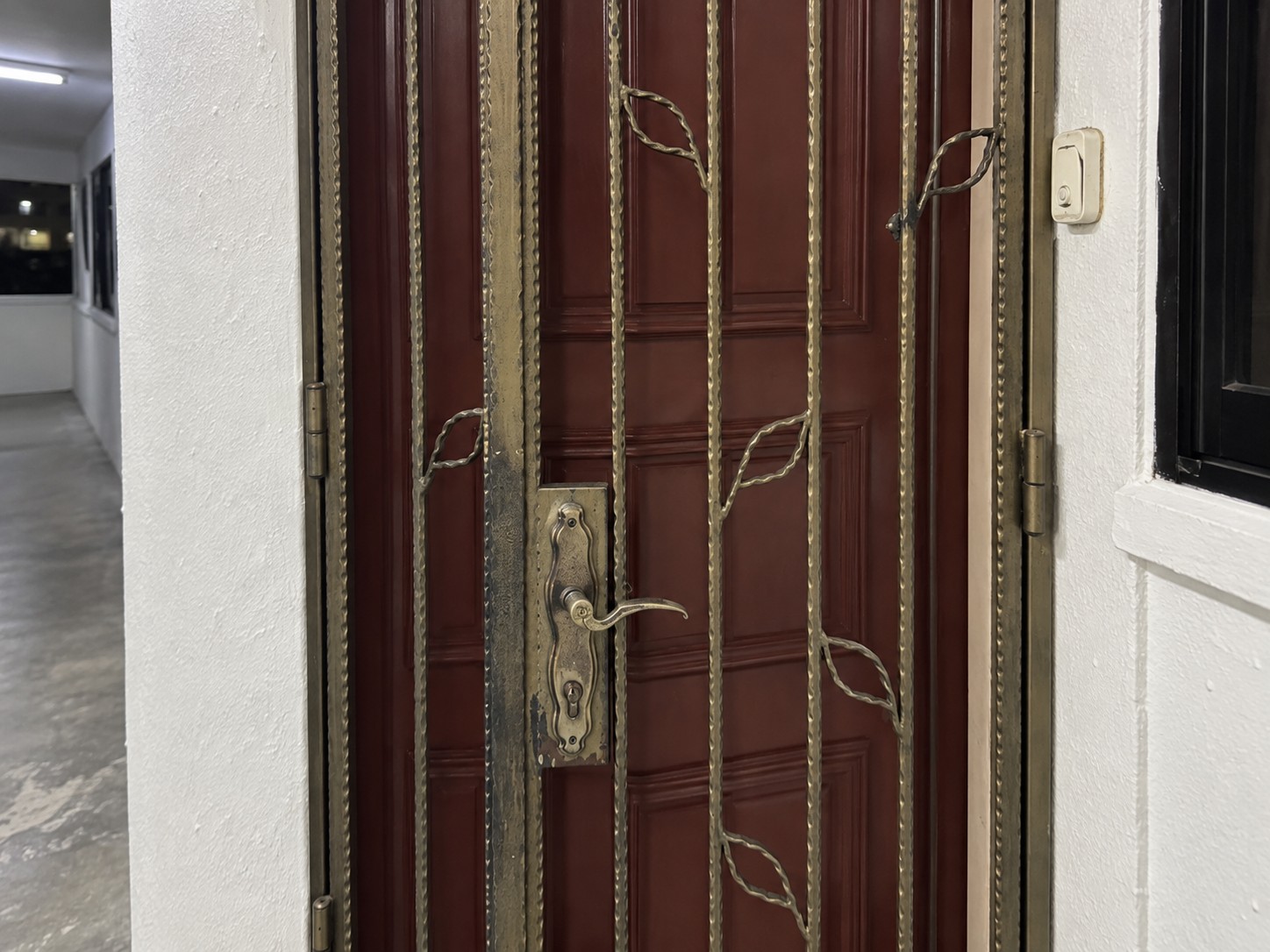
“Perhaps you don’t know what’s making the noise? Could I come in and show you?”
No. He didn’t know me. If the police came, that would be different. We needed to leave: they were watching television.
They shut the door and wouldn’t open it to us again.
Over the course of our attempts, we must have played the sound about fifteen times. In my memory, each burst seemed to last around thirty seconds. It was loud enough for us to hear clearly outside. How it wasn’t interrupting their television, I still don’t understand.
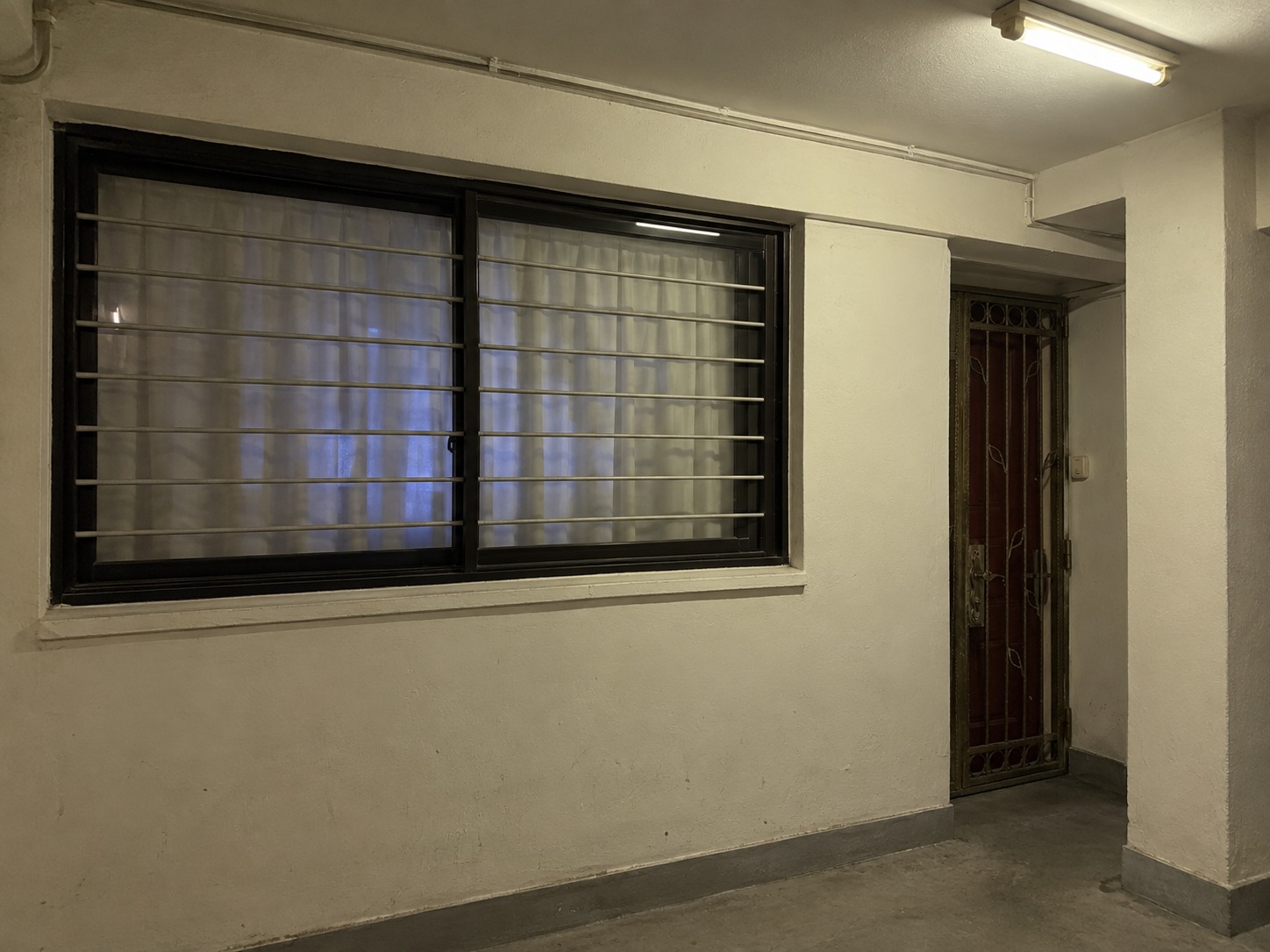
By then I was angry. I had come to thank someone for finding our things. I had been mentally choosing chocolates. Now I was standing outside with my son, listening to our supposedly absent property beeping inside.
That was what shocked me: how far this was from my usual experience here. What use was somebody else’s access fob to them? Why not just hand it over? I couldn’t make sense of it. It hasn’t changed how I feel about people in Singapore; this encounter remains a strange exception.
But at that point, it had become a matter of principle.
It was different when the police knocked
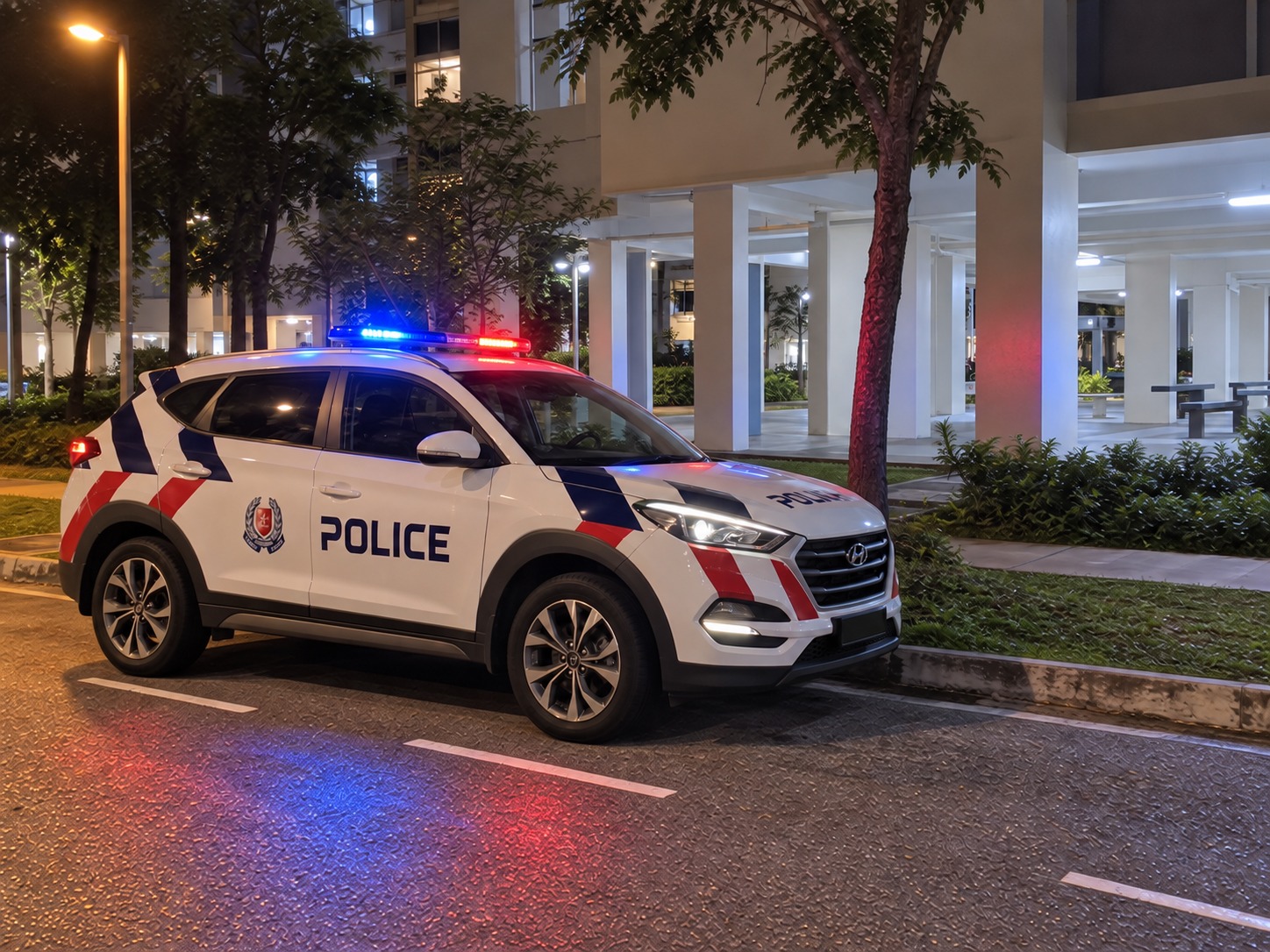
I called the police, feeling a little embarrassed about taking up their time. My son had lost his keys, we had tracked them down, but couldn’t get them back.
We waited for perhaps thirty or forty minutes, walking around the open ground floor beneath the flats — the void deck.
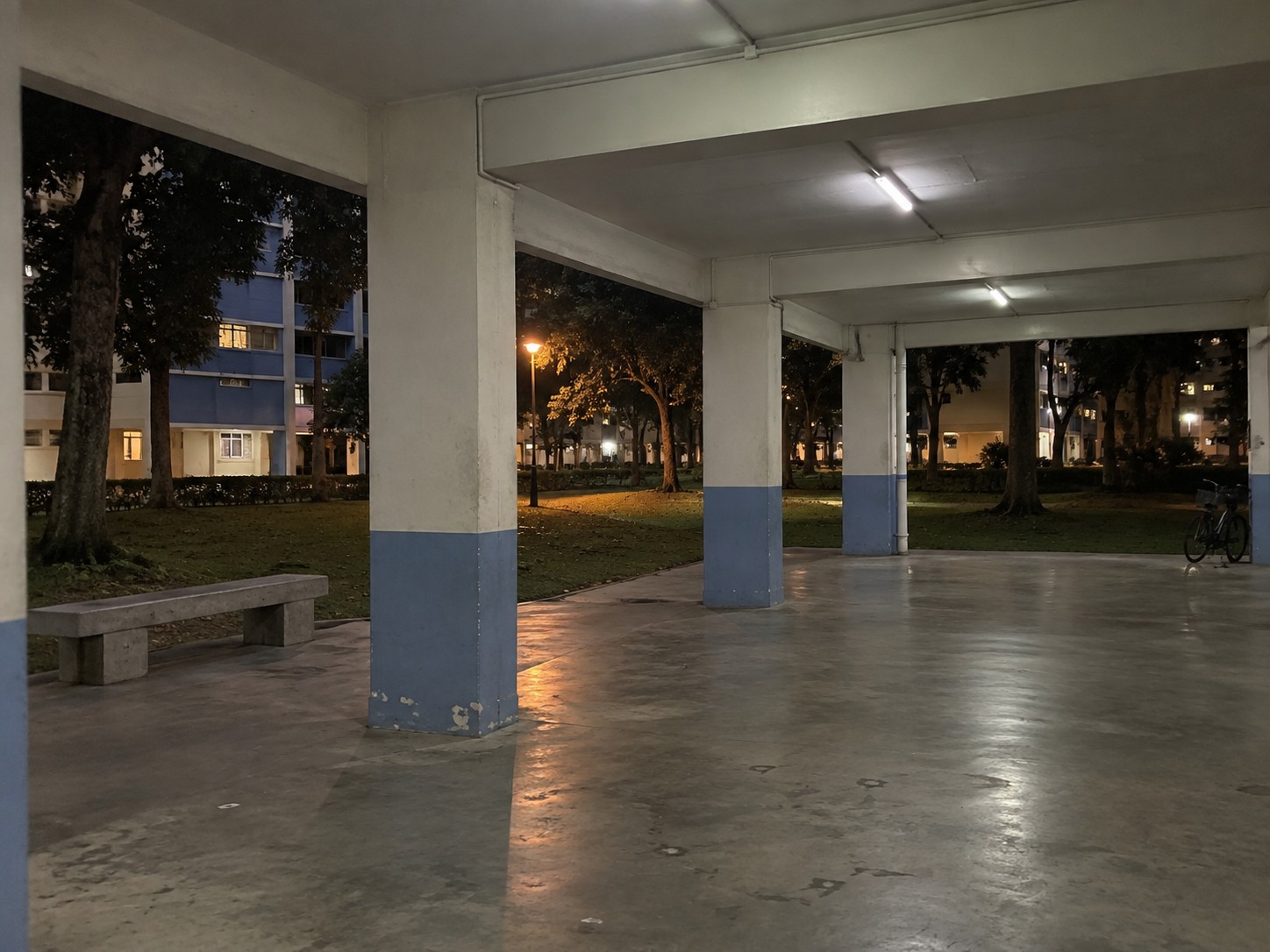
Two officers arrived. At first, they suggested that the app might not be showing the location accurately. I asked them to come upstairs and listen.
We reached the door. I played the sound. It beeped.
The officers heard it and rang the bell. This time, the door opened.
They spoke to the residents in Chinese. After a while, the man I had been talking to brought out the electronic fob and AirTag. The ordinary metal key was no longer attached.
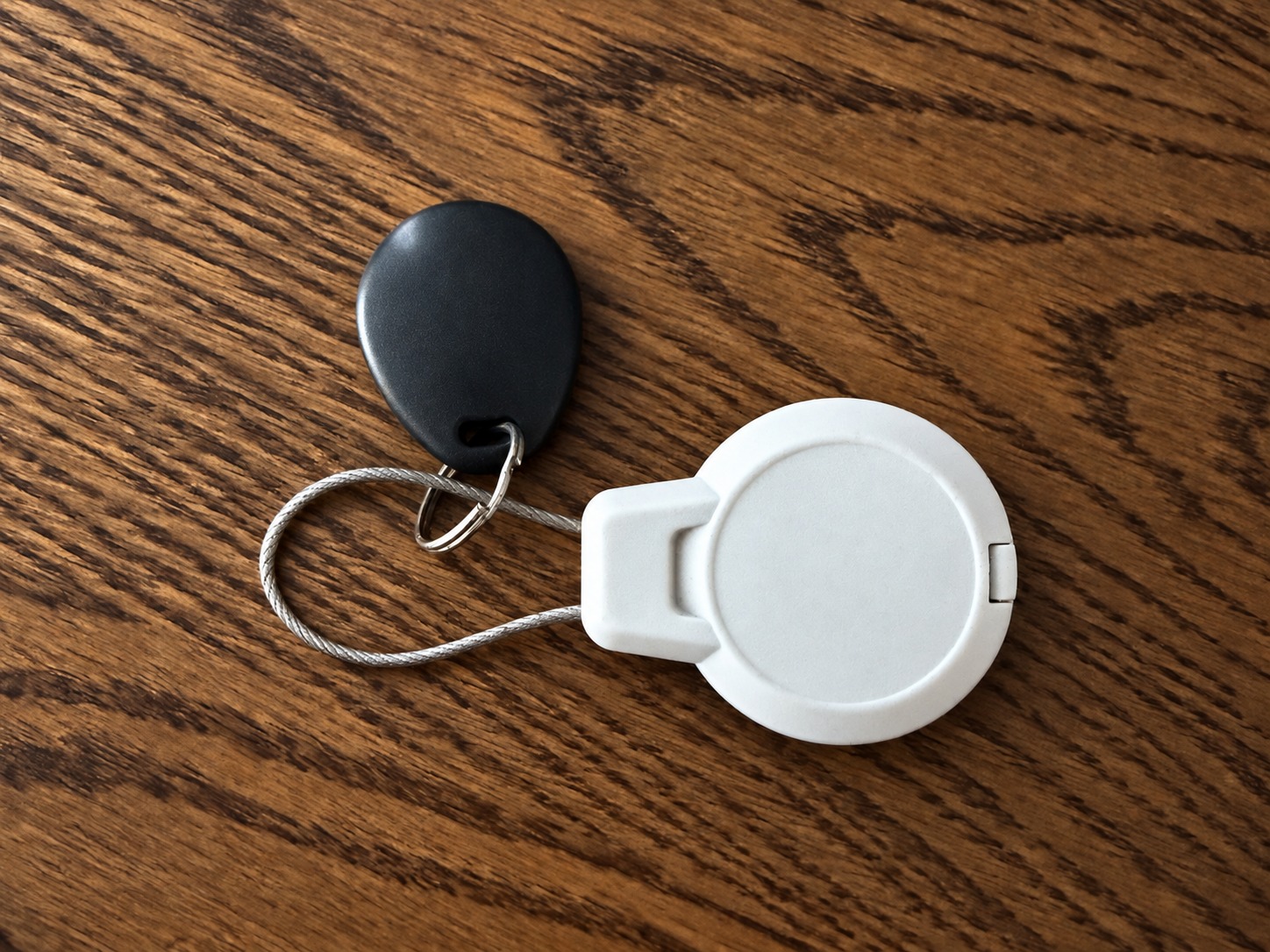
The explanation relayed by the officers was that the man hadn’t understood me. Apparently, my English had not got the message across. He said he had found the fob on a bench.
I thought we had understood each other quite well when it came to “nothing here” and “go away”. But I didn’t argue further. I even said thank you.
One more stop
I held out my hand for the fob.
It turned out I couldn’t take it just yet. The return needed to be documented at the police post, and the officers didn’t have the necessary paperwork with them.
I asked if I could ride with them. No.
“Then give me the address. I’ll walk.”
Bedok South Neighbourhood Police Post was very close by. We walked over, completed the paperwork, and I finally got the fob and AirTag back.
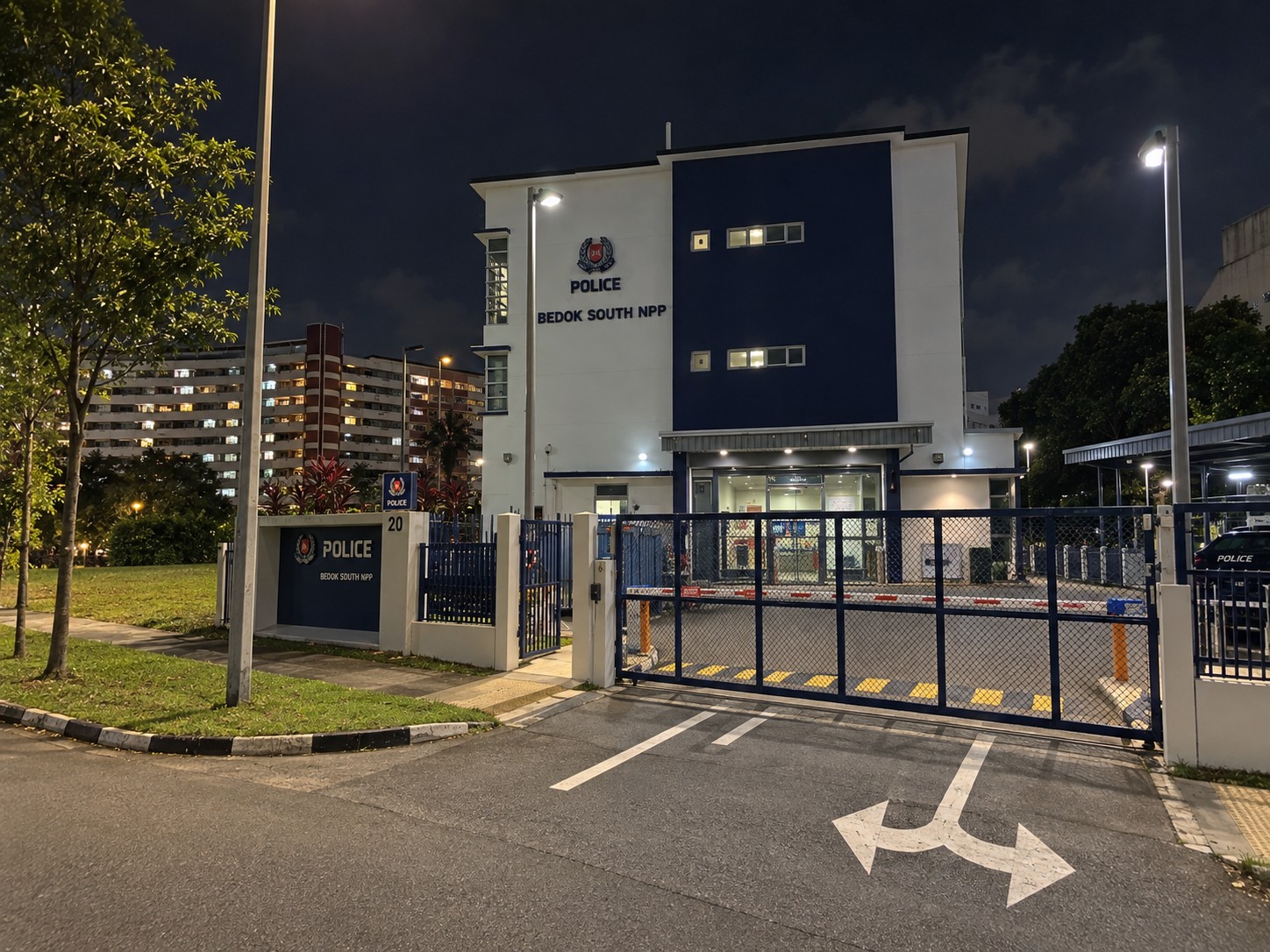
I think it was after eleven by the time we got home. We may have spent more on taxis than it would have cost to replace everything. I didn’t add it up. This wasn’t my first encounter with the uncertain economics of doing things myself.
I had wanted to show my son how Dad solved problems. What he took away from that evening, I don’t know. I had mixed feelings myself. We got the fob back. Why it had needed to become this whole adventure, I still couldn’t explain.
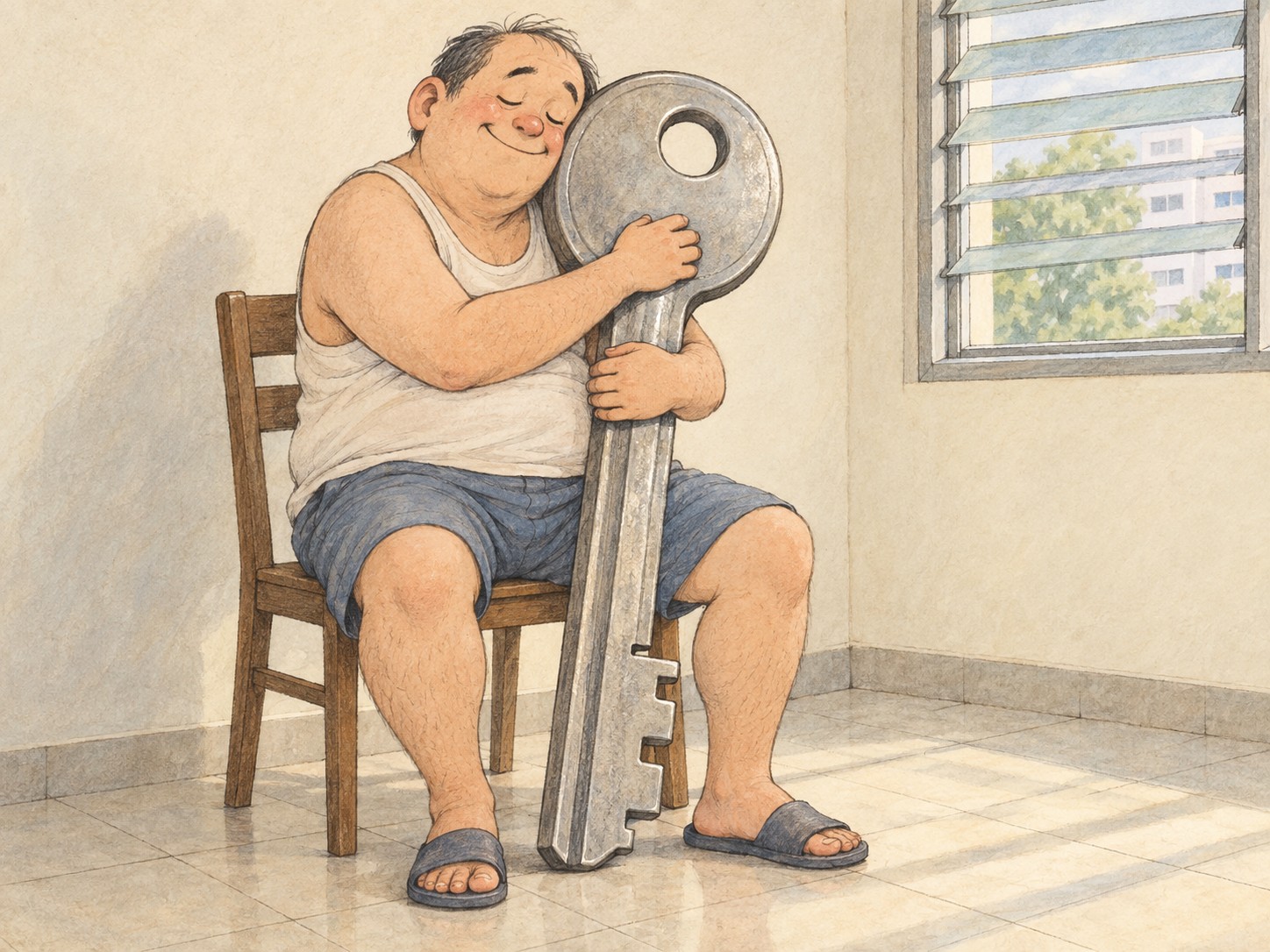
Would you have spent the evening getting the keys back?
Loading responses…