One evening, I was taking a taxi home from the office. We were stuck in traffic, so I opened Apple’s Find My app to see who was already home. Everyone in my family shares their location, which gives me a fairly good idea of who is where. Then, for no particular reason, I switched tabs to check on my eight AirTags.
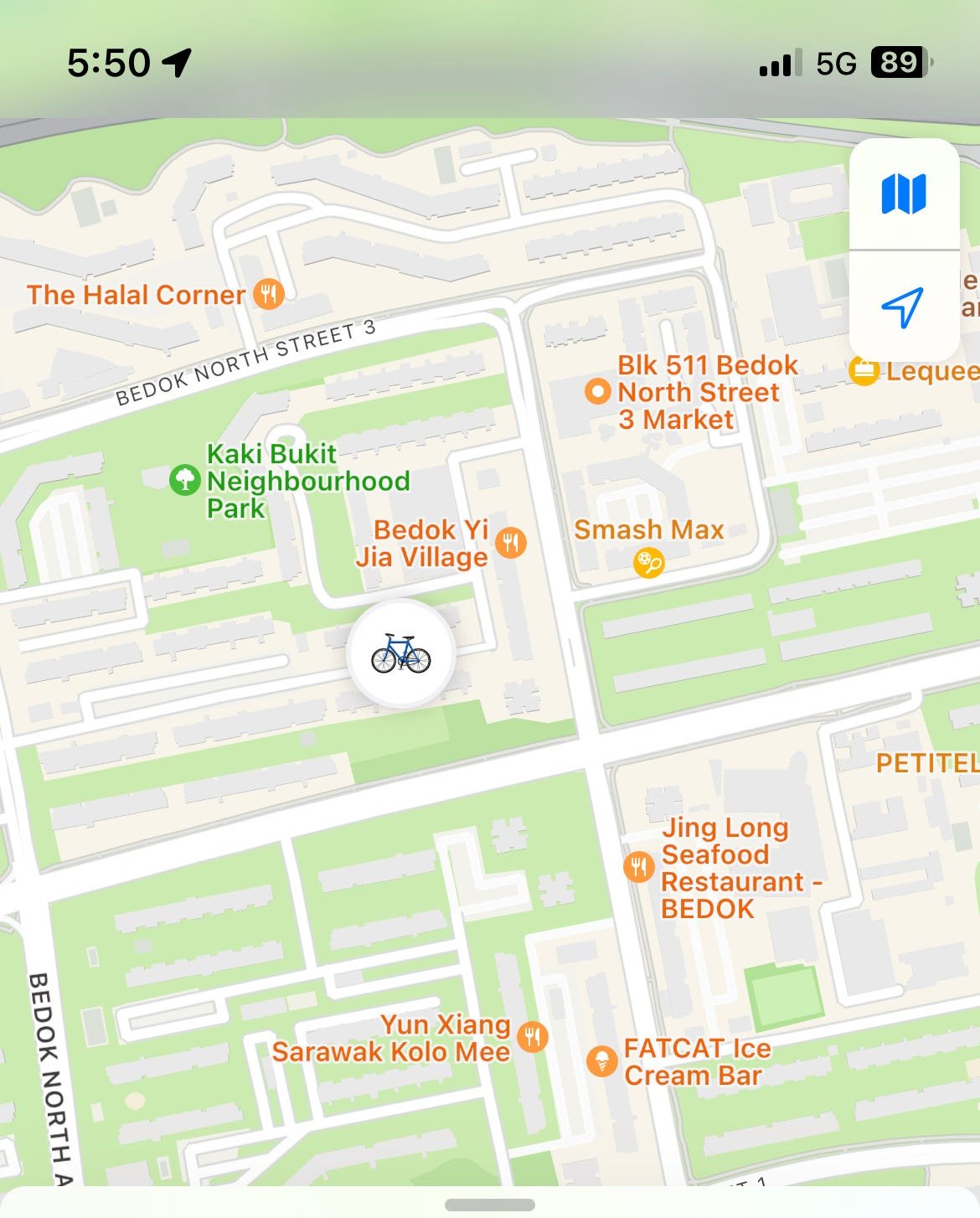
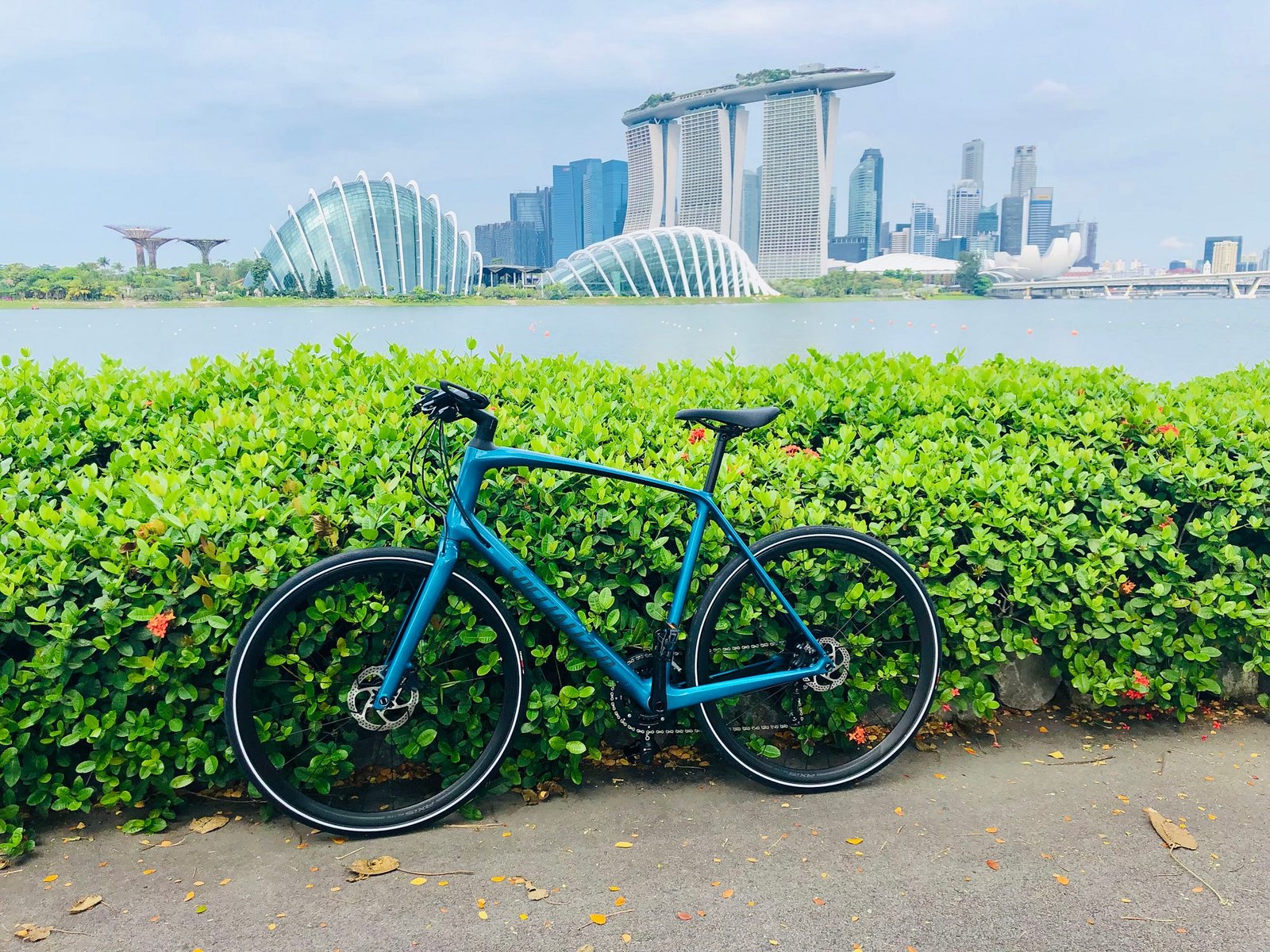
That was when I noticed my favourite bicycle — a turquoise carbon Specialized Sirrus — hanging around Bedok, five kilometres from home. Maybe my wife had taken it out? No. Find My showed her at home. I suddenly felt uneasy. As soon as the taxi reached our condo, I ran to the car park.
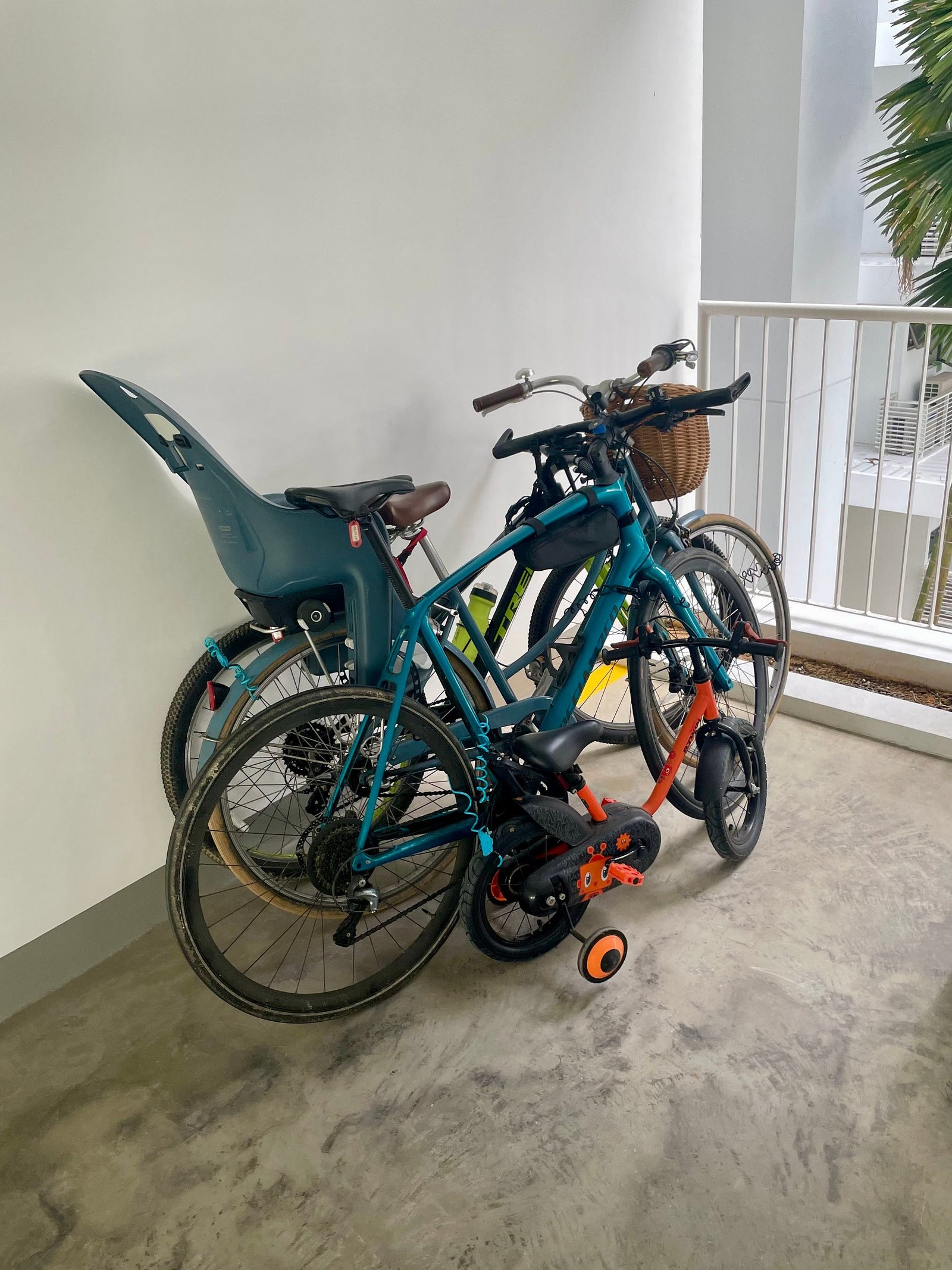
We normally kept our bicycles on the fourth floor of the car park, secured to the railings with thin cables. Our neighbours did the same. Cars are extremely expensive in Singapore, so only about one and a half of the five parking levels were full; the rest were mostly empty. But when I reached the fourth floor, dozens of bicycles were lying in one enormous, unlocked heap. I found my wife’s bicycle and my son’s. My wonderful turquoise Specialized was, of course, not there.
The management had cut the locks
I ran down to the condo management office. A secretary and the estate manager were sitting in the small room:
— My bicycle is missing. It’s an expensive one. Where is it?
— There was too much junk and abandoned bicycles accumulating in the parking lot. People leave the condo, and they just throw away their bicycles. So we decided to register all the bicycles. We cut the locks from the unregistered ones and plan to dispose of them.
— But all my bicycles were registered two years ago. They had tags with numbers on them, which you issued to me.
— Oh! We started a new registration a few months ago. You should have registered again and received new-style tags. We wrote announcements about it and invited people to register.
— Yes, I saw the announcements. But there was not a word that the old registration was invalid. You have all my contact details, the bicycles have tags. What’s the problem with calling or writing?!
— Oh! There are so many of you…
— So where’s my bicycle?!
— We don’t know. It should be in that pile, probably.
— But I do know. It’s somewhere in the Bedok area. There is an AirTag hidden on it.
— (The manager suddenly looked very interested.) Oh. What kind of tag? Can we see where the bicycle is? Could you send us a screenshot?
— So what are we going to do? Am I going to Bedok and calling the police?
— Well, you have the right to decide for yourself. Maybe you won’t rush? We have a meeting after 8 PM. Maybe someone knows something about your bicycle. I’ll let you know, perhaps.
— No, thanks. I will go and look for my bicycle and call the police.
Somewhere in Bedok
I called another taxi and headed for the location shown in Find My. It was not far, but time moved very, very slowly. Traffic light. Another traffic light. Finally I arrived. An AirTag gives you only an approximate location, so I had been hoping for a neighbourhood of small houses. Instead, I found two enormous twelve-storey HDB blocks, each with eight entrances. Find My was basically saying: “Somewhere around here.”
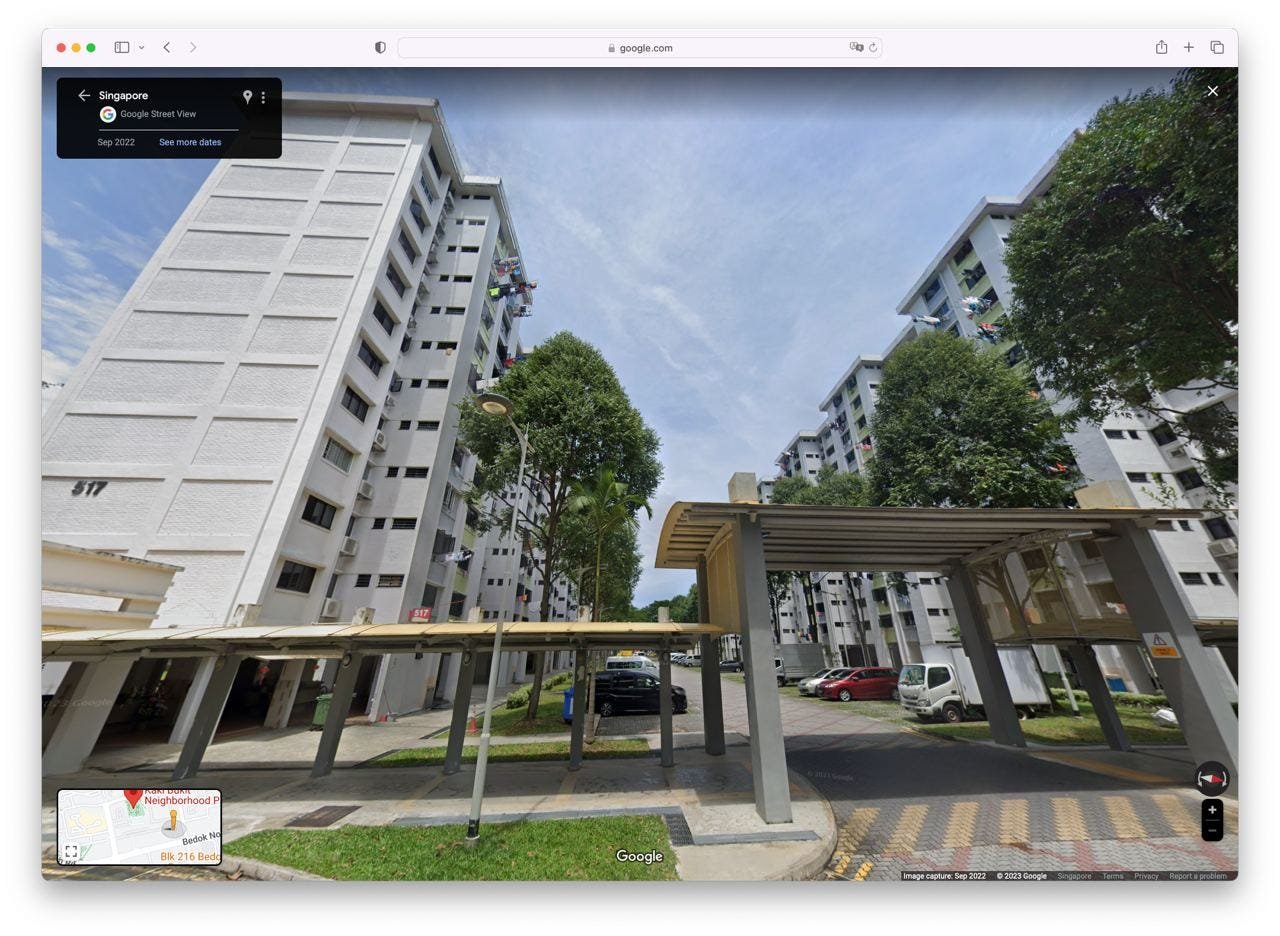
The blocks stood on pillars, with an open public space — a void deck — at ground level. There were bicycle racks there, so that was where I started. I switched Find My into Precision Finding mode and ran around. In theory, once I was close enough, the phone would detect the AirTag and point me towards it. Nothing. The bicycle — or perhaps only the tag — was probably somewhere upstairs. Whenever an iPhone passed close enough, the AirTag quietly updated its location. So I knew it was still there. Somewhere.
I started running through the blocks: up the stairs to the twelfth floor, across to another entrance, then down again. Long open corridors connected the entrances on the third, sixth and ninth floors, so you could enter through the first stairwell and emerge from the eighth. Adrenaline kept me moving. Many flats had metal gates that let air through, which meant I could see ordinary families eating dinner and watching television. They could also see a sweaty ang mo running past their doors.
After about half an hour, I was getting tired. The app still could not find the tag. And I started thinking: suppose I locate it and it is behind a locked door. Then what? The residents were probably starting to wonder why this ang mo kept running around their building. I went down to the courtyard, called the Singapore police on 999 and explained the situation. The operator understood how AirTags worked and sent a patrol car. I bought some water and waited.
The police arrive
About ten minutes later, a police car arrived with two young officers:
— They stole my bike, and it has a hidden tag, so I’m running around looking for it.
— Yeah, we’ve heard about such tags. Just recently, a family lost their grandpa, he went off somewhere, and they found him with this tag!
— So can you help me somehow?
— How can we help you? Look at how many apartments there are. You keep running for now, and once you find the bike, call us!
And they left. I kept running. Then my phone battery began to die; Precision Finding apparently uses a lot of power. I called my son and told him to take a taxi over with a power bank and a cable. I ran a little more, with no result. Then I had a brilliant idea: I did not have to run up the stairs. I could take the lift to the twelfth floor and walk down.
My phone rang:
— This is a police officer. We came to see you twenty minutes ago.
— Yes! But I still haven’t found the bicycle.
— You know, we thought about it — let’s file a case. We’re downstairs. Please come and meet us.
The officers took a report. They recorded the bicycle’s value — S$2,000 — where and how it had been stored, how I had discovered it was missing, its serial number and old photographs. Then they handed me a card with the case number, wished me luck and left.
My son arrived with a fully charged power bank and a pile of cables. Naturally, none of them fitted my phone. We had to walk to the “nearest” 7-Eleven, which was not particularly near, and buy the right one. Eventually the phone began to charge.
Found
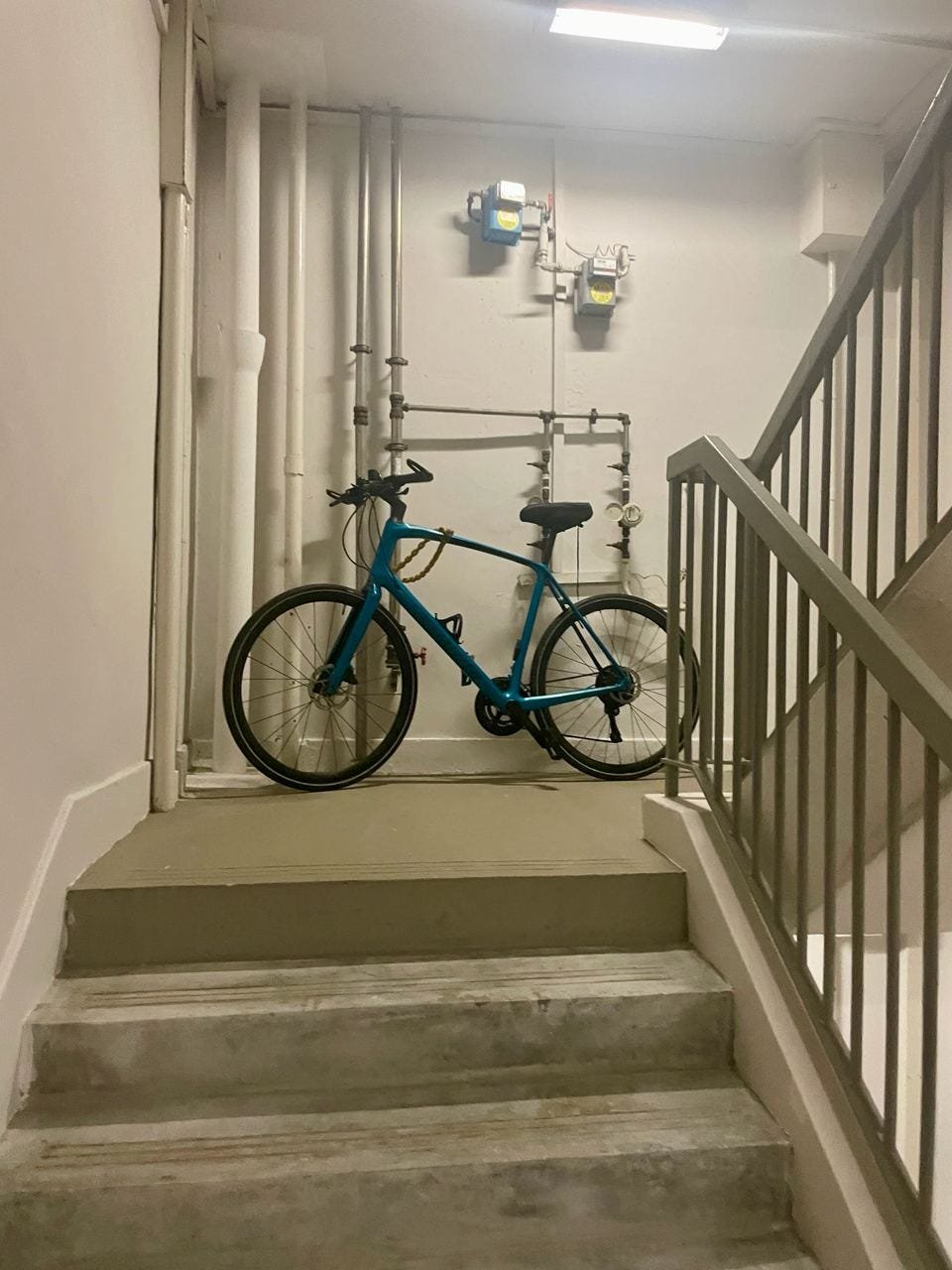
We continued together. Then, in an entrance I had already searched, somewhere around the tenth floor, Find My finally saw the tag. Pure joy. We went down one more floor — and there was my bicycle. Clean, undamaged and chained to a pipe.
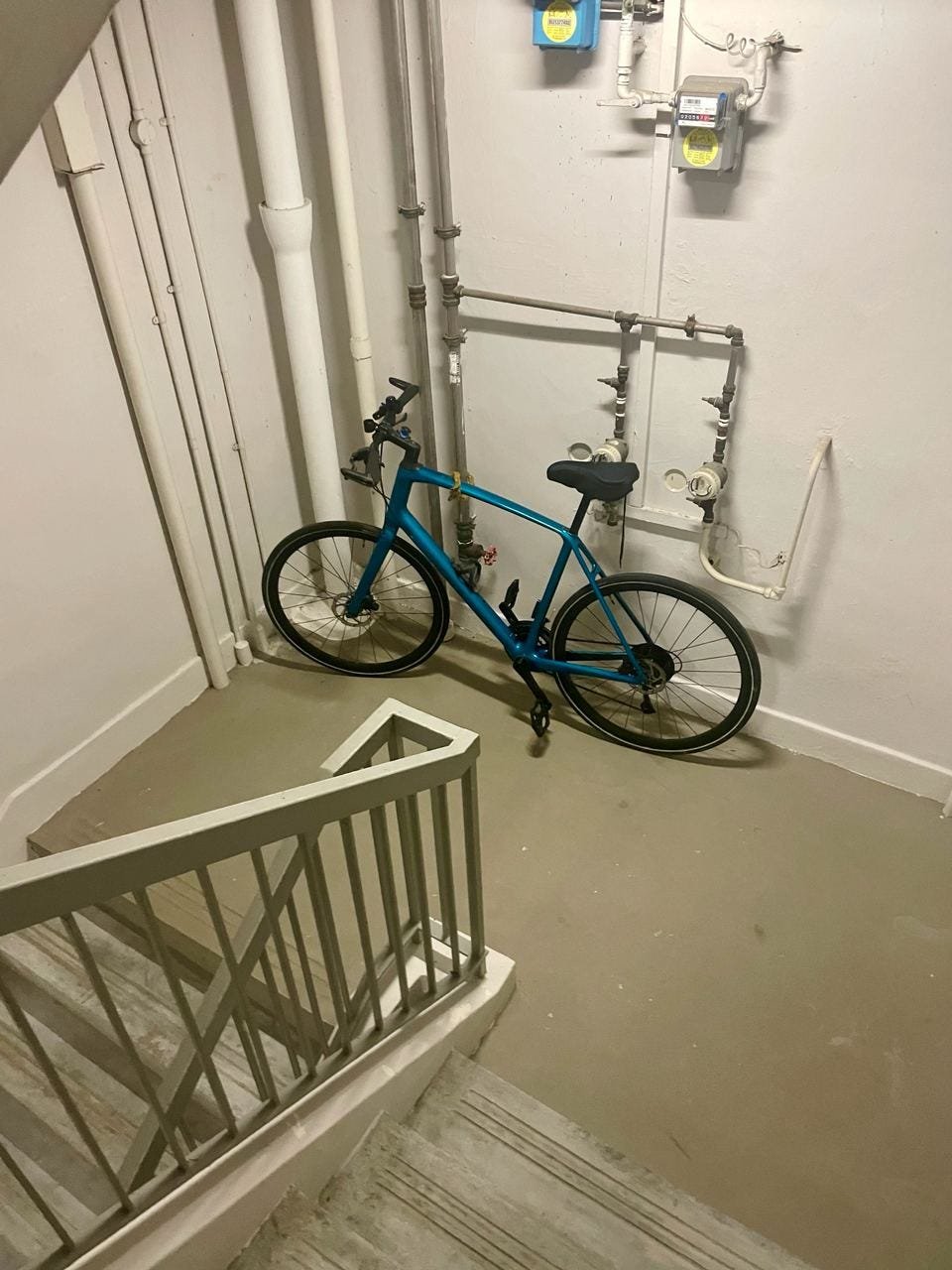
I called the police. They were delighted and promised to return. My son went downstairs to meet them while I guarded the bicycle. It had been left between the eighth and ninth floors, putting four flats under immediate suspicion. Nobody answered at one; the residents of the other three said it was not theirs. Neighbours remembered that the bicycle had appeared only a few hours earlier. The suspect was probably tall too: my bicycle has a large frame.
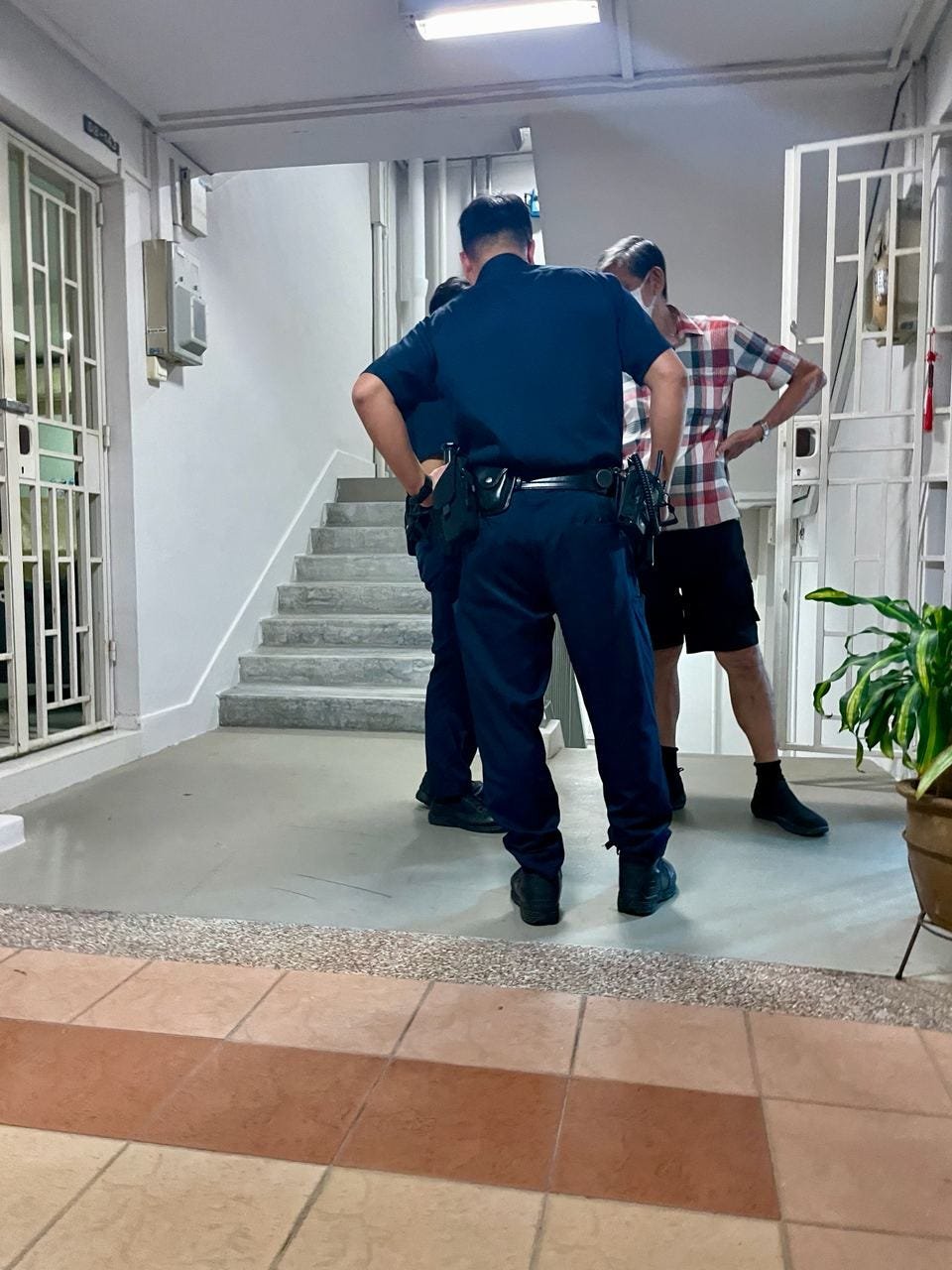
It turned into a proper celebration for the police. Cars arrived one after another. Someone photographed the scene; another officer took fingerprints and DNA samples; and, for reasons I never understood, an entire squad appeared. My son and I were asked to leave the “crime scene” and wait downstairs.
About an hour and a half later, the police called me back upstairs. The photographs and serial number matched, so they could cut the lock and release the bicycle into my care:
— Here’s your bicycle! Take it! But now you can’t sell it or lose it for the next six months! It’s physical evidence in the case!
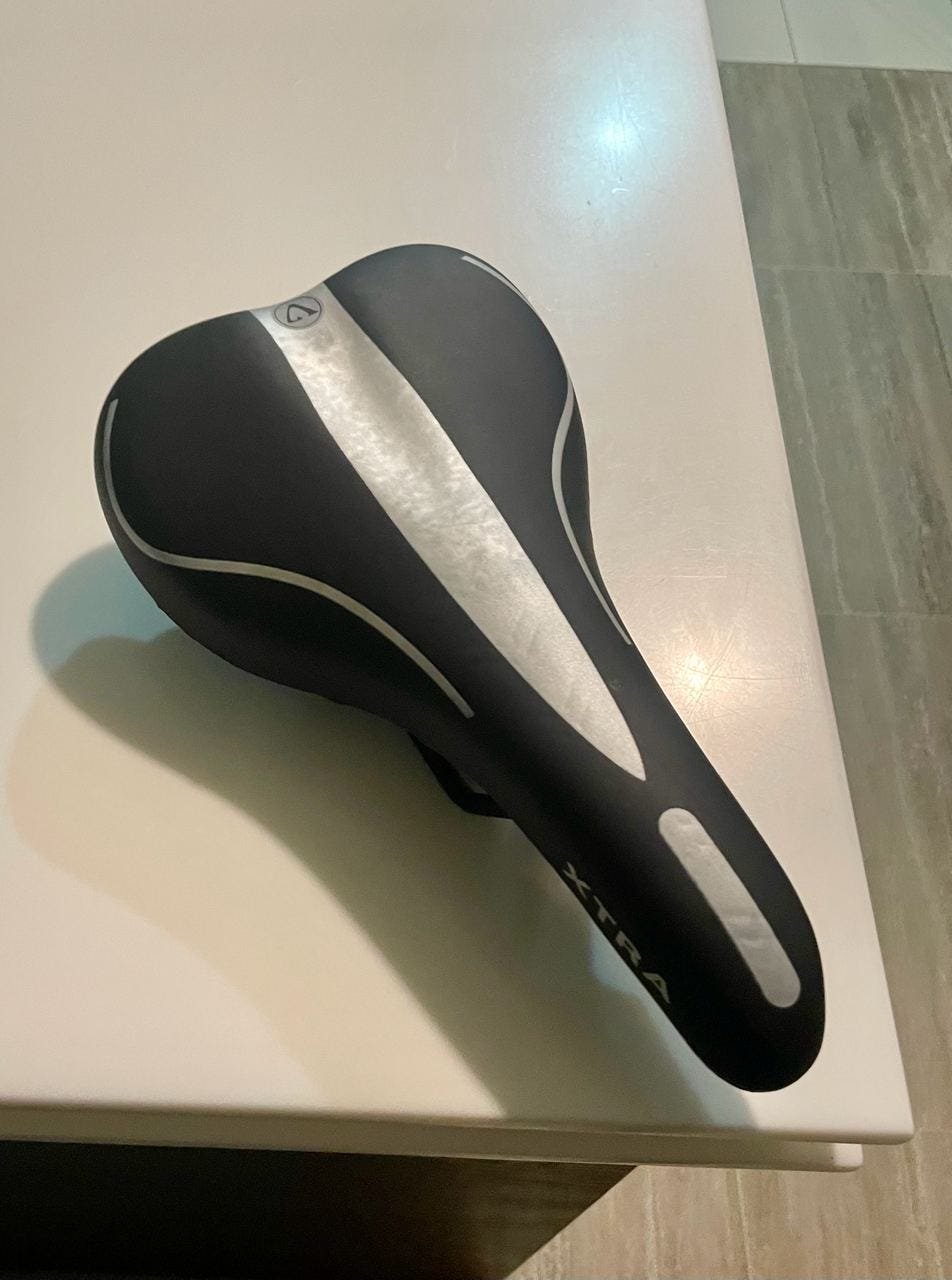
— Oh, you know, the saddle on the bicycle is not mine! I had a beautiful one! And this one is some cheap crap.
— We’ll have to take it! It’s also evidence!
— How will I ride? Can you give me a ride home in the car?
— Noooo! The bicycle won’t fit in our car. Here’s what you can do: you ride the bicycle yourself for now, and we’ll come to your house and pick up the saddle.
Another bicycle, many years earlier
I sent my son home in a taxi and rode the bicycle back myself. It was late, the streets were quiet, and I found myself thinking about my childhood.
When I was ten, something similar happened. My friends and I had cycled to a children’s park. While we were playing arcade games, somebody stole my bicycle. At the time, it was a catastrophe. My family had no money for another one — and even if we had, in the Soviet Union you could not simply walk into a shop and buy whatever you wanted. There were shortages. For a week, I went to the balcony every morning, hoping the bicycle would be there and the whole thing would turn out to have been a dream. It never came back. My childhood social life collapsed: without a bicycle, I was no longer very interesting to my bicycle-riding friends.
I rode home through green traffic lights, the night air in my hair. And somewhere on the pavement, ten-year-old me was standing there, smiling.
Found it.
Leave a Reply