Jerky Driving in Singapore Taxis: A Passenger’s Story
The other day, I needed to get somewhere and booked Grab Business. Outside peak hours, it can be only slightly more expensive than a regular Grab, while the difference in comfort is considerable.
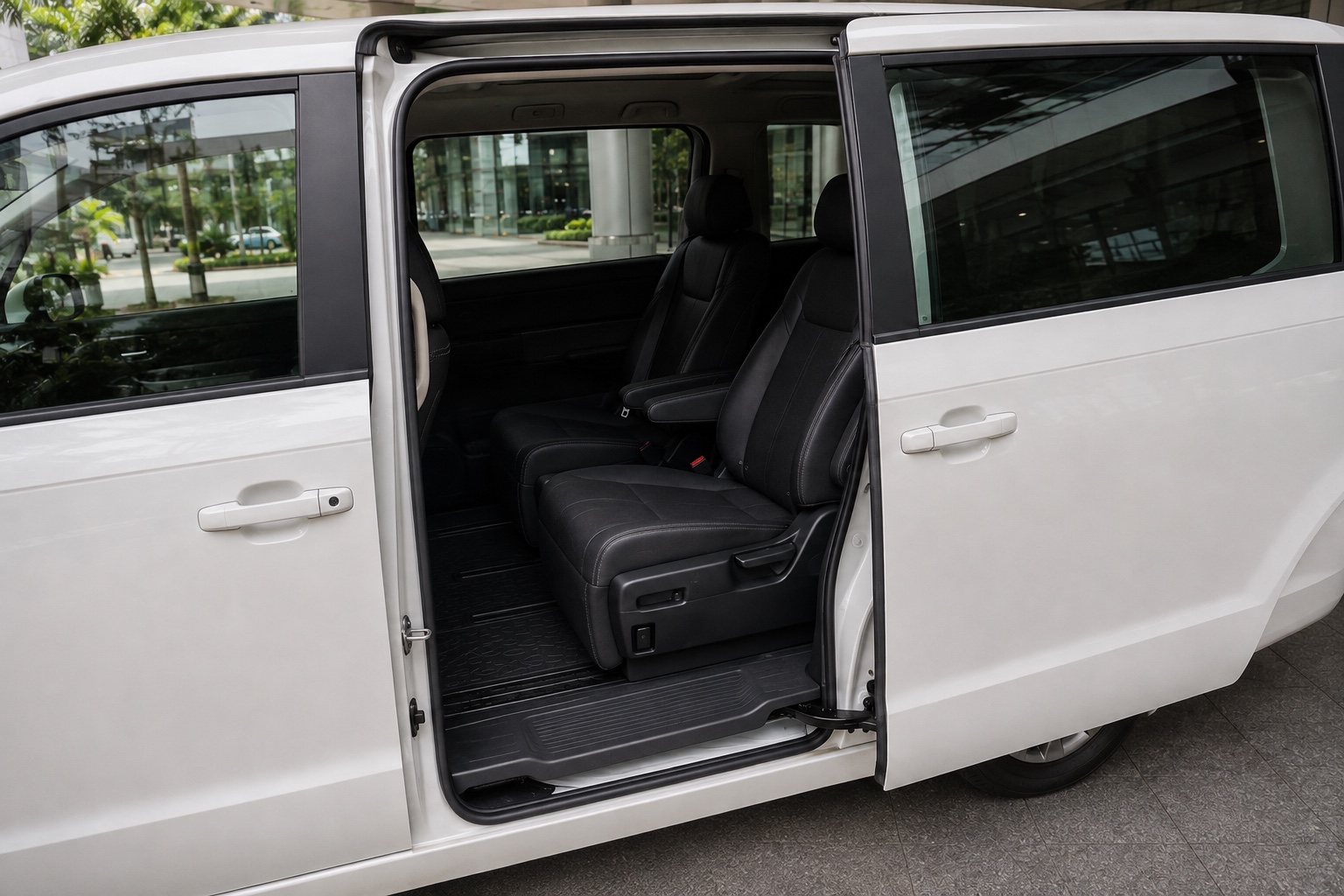
Instead of an ordinary car, you often get a Toyota Alphard, Toyota Noah or another large minivan — “the big ones”, as my son calls them. There is plenty of room inside, the sliding doors open automatically, getting in and out is easy, and the car normally smells fine. In my experience, the drivers tend to be smoother too. For a small surcharge, the journey is usually much more pleasant.
This time, a clean Honda StepWGN arrived with an older driver. I got in, we set off, and within a couple of minutes I felt a familiar rhythm.
Accelerate. Release the pedal. Accelerate again. Release again.
The car was moving in a constant series of small surges. Nothing dramatic happened: there was no emergency braking or sudden swerve. It was simply impossible to settle into the ride because the speed kept changing every few seconds.
The accelerator-pumping habit
I have encountered this often enough to recognise the pattern immediately. The driver presses the accelerator, lets the car slow down, then presses it again. On a short ride, it may be merely irritating. After fifteen or twenty minutes, it can make me thoroughly motion-sick. Even after getting out, I sometimes need another thirty or forty minutes to feel normal again.
I have heard the theory that this habit saves petrol, but I do not know why individual drivers do it.
I have no idea whether the driver that day believed any version of this theory. I only know that Grab has a name for the result. In its post-ride feedback, there is a specific option for jerky driving.
The phrase is useful because the problem is hard to describe while it is happening. The driver is not necessarily speeding, braking sharply or driving dangerously. The ride is simply never smooth — and for a passenger prone to motion sickness, that is enough.
I finally said something
Normally, I switch on what I think of as suffer-in-silence mode. I say nothing, stare out of the window and wait for the journey to end. Complaining about somebody’s driving while sitting in their car is awkward, and I rarely feel like starting an argument with a stranger.
This time, however, I was not in the mood to spend the rest of the day recovering.
“Uncle, why do you keep pressing and releasing the accelerator?” I asked. “I’m getting motion-sick. Do you want me to throw up in the car? Could you try driving smoothly?”
He was deeply offended.
“I’ve been driving all my life! You’re the first person who has ever complained!”
He looked at me as if I had questioned his entire professional biography. Here was a man with decades of experience being given driving advice by a passenger in the back seat. For a moment, I thought he might pull over and ask me to leave.
But he did not. Instead, something unexpected happened: he started driving perfectly normally.
The acceleration became smooth. The car stopped surging. He drove carefully and steadily, with no more repeated pumping of the pedal. The difference was immediate.
How do you ask for a smoother ride?
That short conversation left me with a practical problem. Staying quiet means accepting the nausea and losing another part of the day afterwards. Speaking up may solve the problem immediately, but it also risks turning every trip into a small confrontation.
Buying a car in Singapore would be a rather expensive solution.
Asking for a smoother ride helped. Finding a less confrontational way to ask is the part I still need to work on.
Do Singapore taxi rides make you carsick?
Loading responses…